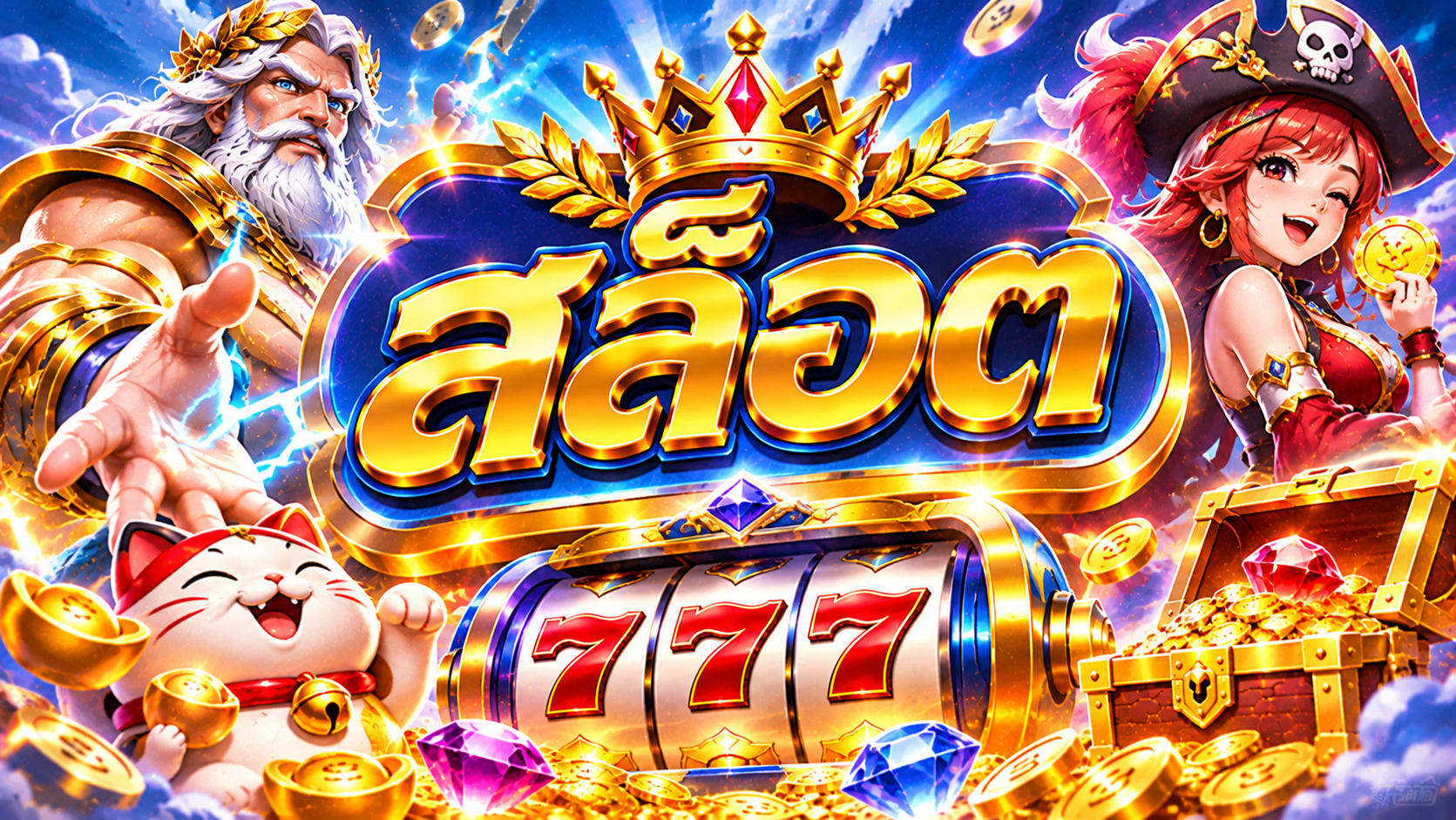
สล็อต: Exploring Modern Slot Entertainment, Game Design, and Digital Innovation
The world of สล็อต has changed dramatically over the past several decades. What began as a simple mechanical form of entertainment has developed into a sophisticated category of digital games combining visual storytelling, interactive technology, mathematical systems, and modern user interface design. Today, slot games represent an interesting intersection between traditional gaming concepts and contemporary software development.
Unlike many other casino games, slots generally require limited decision-making during individual rounds. Their appeal is often connected to colorful presentations, recognizable symbols, engaging animations, and a wide variety of fictional themes. Nevertheless, the simplicity of the interface can conceal complicated mathematical systems that determine how outcomes are generated and how game features operate.
Understanding slot entertainment therefore involves more than examining spinning reels. It requires looking at game development, audiovisual design, probability, accessibility, and the psychological effects of randomized rewards. This article provides a detailed educational examination of modern slots, including their evolution, technological characteristics, design principles, and responsible entertainment considerations.
The Transformation of สล็อต From Mechanical Machines to Digital Games
Slot entertainment has experienced several major technological transitions. Each generation introduced new possibilities for game presentation while retaining the recognizable concept of reels and symbols.
The Mechanical Entertainment Era
Early slot machines relied on physical components. Their reels contained a limited collection of symbols, and the visible result was produced through a mechanical process. These machines established many visual conventions still associated with slots, including fruit symbols, bells, and number sevens.
Mechanical technology placed practical limitations on the number of symbols, reel arrangements, and special features that could be implemented. As a result, early games were comparatively straightforward in both presentation and operation.
The Introduction of Electronic Systems
Electronic components expanded the possibilities of slot machine development. Manufacturers could introduce new controls, lighting effects, and more complicated game functions. Electronic technology also allowed developers to separate some aspects of outcome determination from the physical appearance of the reels.
The Digital Revolution
Video technology fundamentally changed the slot industry. Developers were no longer restricted to physical reel strips or mechanical displays. Digital screens allowed elaborate backgrounds, animated characters, interactive bonus sequences, and more complex symbol arrangements.
This transition also encouraged the development of themed slot games based on fantasy worlds, historical adventures, mythology, science fiction, and fictional narratives.
The Mobile Gaming Generation
Smartphones and tablets introduced another important development. Slot interfaces could be adapted for touchscreens, portrait layouts, and different screen resolutions. Developers increasingly considered mobile usability during the earliest stages of game production rather than treating mobile compatibility as an additional feature.
Why Modern Slot Games Use Visual Storytelling
Visual storytelling is a defining characteristic of many contemporary slot games. Instead of presenting only symbols and numerical results, developers often create a fictional environment with recognizable characters, locations, and visual themes.
Building a Recognizable Game Identity
A game’s identity may begin with its title, color palette, character illustrations, and background environment. These elements create a recognizable visual style that distinguishes one product from another.
For example, a fantasy-themed game might feature enchanted forests, mythical creatures, and magical objects. A futuristic game could use spacecraft, holographic displays, and metallic interface elements.
The Role of Character Design
Characters can make digital games feel more distinctive. They may appear during introductions, feature sequences, or special animations. Their purpose is often to strengthen the fictional setting and create continuity between different parts of the game.
Environmental Design
Background environments establish atmosphere. Designers may use lighting, architectural elements, landscapes, or animated effects to reinforce the selected theme.
These visual elements influence the entertainment experience but do not determine whether a game offers favorable mathematical outcomes.
Storytelling and Game Mechanics
Some games connect visual storytelling to special features. A bonus sequence may introduce a new environment or reveal additional elements of the fictional narrative. Although the presentation may resemble an interactive adventure, the financial outcomes remain governed by the game’s mathematical rules.
Understanding the Architecture of a Modern Slot Game
A digital slot game is built from several interconnected systems. Each system has a particular responsibility, ranging from displaying animations to calculating the outcome of a round.
The Game Interface
The interface contains the visible reels, symbols, controls, information panels, and navigation elements. Its design should allow users to understand what is happening without unnecessary confusion.
The Mathematical Model
The mathematical model defines the possible outcomes and their associated probabilities. It also establishes the payout structure and the theoretical long-run return.
The Randomization System
Most modern digital slots use a random number generator to produce unpredictable outcomes according to the programmed mathematical model.
The Animation System
The animation system translates the outcome into a visual presentation. It may display reel movement, symbol transitions, lighting effects, or additional sequences.
The Audio System
Music and sound effects reinforce the presentation. They may respond to game events, symbol arrangements, or transitions between different screens.
Slot Reel Layouts and Their Design Differences
Not all slot games use the same arrangement of reels and symbols. Developers select layouts based on the intended visual experience and mathematical structure.
Traditional Three-Reel Layouts
Three-reel games resemble classic mechanical slot machines. They often feature familiar symbols and a comparatively simple presentation.
Five-Reel Video Layouts
Five-reel arrangements are common in contemporary video slots. They provide additional space for different symbols and visual features.
Expanded Reel Grids
Some games use larger grids with additional rows or reels. These layouts can support alternative methods of evaluating winning combinations.
Dynamic Reel Structures
Certain games modify their visible reel arrangements during particular features. These changes follow predetermined rules and should be explained in the game’s information section.
The Importance of Sound Design in Slot Entertainment
Sound is a significant component of interactive entertainment. In slot games, audio may establish atmosphere, provide feedback, or accompany animated sequences.
Background Music
Background music can reinforce a game’s fictional environment. An adventure-themed game may use orchestral music, while a futuristic game may feature electronic sound effects.
Event-Based Audio
Different sounds may accompany reel movement, special symbols, or bonus presentations. These sounds help users recognize changes in the game state.
Audio and Emotional Perception
Sound effects can influence how people perceive outcomes. Celebratory sounds may make a result feel more significant than its actual financial value.
For this reason, responsible game design should avoid misleading users about the meaning of a result.
Audio Accessibility
Users should ideally have access to volume controls and clear visual information that does not depend entirely on sound.
Understanding Random Rewards and Player Psychology
Slot games provide an example of how randomized reward systems can influence human attention and behavior. Understanding these psychological mechanisms is important when evaluating digital entertainment.
Variable Outcomes
Randomized games produce outcomes that cannot be reliably predicted from ordinary observation. This uncertainty can attract attention because the next result is unknown.
Near-Miss Experiences
A near miss occurs when the displayed symbols appear close to a winning combination without satisfying the actual payout conditions.
Research into gambling behavior has examined how near misses can influence motivation and perceptions of success. However, a near miss does not mean that the next outcome is more likely to be favorable.
Visual Reinforcement
Animations, sound effects, and colorful displays can reinforce the emotional impact of game events. These effects should not be confused with mathematical information about the probability of winning.
The Illusion of Control
People sometimes believe that timing, repeated actions, or particular routines can influence random outcomes. In a properly implemented independent RNG game, such behavior does not provide control over the result.
How Slot Games Use Mathematics
Behind the visual presentation of สล็อต is a mathematical model that determines possible outcomes, payout values, and long-run expectations.
Probability Distribution
Every possible result has an associated probability under the game’s mathematical model. Some outcomes may occur relatively often, while others are designed to be uncommon.
Expected Value
Expected value describes the average mathematical result over a very large number of trials. It is calculated using the probabilities and financial values of possible outcomes.
Return to Player
Return to player, or RTP, describes the theoretical percentage of total wagers returned over the long run. A game with a theoretical RTP of 96% has a corresponding house edge of 4%.
Short-Term Variation
Actual results during a limited session can differ considerably from the theoretical RTP. This is because random outcomes can produce substantial variation over short periods.
Volatility
Volatility describes the variation in payout sizes and frequencies. Two games may have the same RTP while displaying very different patterns of short-term results.
Comparing Different Slot Mathematics
| Characteristic | What It Describes |
|---|---|
| RTP | Long-run theoretical return |
| House Edge | Long-run mathematical advantage of the operator |
| Volatility | Variation in payout sizes and frequency |
| Hit Frequency | Frequency of outcomes classified as wins under the game rules |
| Maximum Payout | Upper limit of a possible payout under specified conditions |
| Bonus Probability | Likelihood of triggering a particular feature |
These characteristics provide different types of information. A game with a large maximum payout does not necessarily have a high RTP. Similarly, a relatively frequent winning event does not guarantee an overall positive financial result.
How Bonus Features Contribute to Game Design
Bonus features are often used to create variety within the game experience. They may change the visual presentation or introduce additional evaluation rules.
Free-Spin Sequences
Free-spin features provide additional rounds under specified conditions. Their rules may include modified symbols, multipliers, or alternative reel arrangements.
Interactive Bonus Presentations
Some games display interactive sequences involving characters, objects, or selections. The extent to which user interaction influences the result depends on the game’s documented rules.
Symbol Transformations
Special features may transform certain symbols into different symbols or modify their behavior.
Multipliers
Multipliers increase qualifying payout amounts according to specified rules. Their presence does not guarantee an overall profit.
Feature Frequency
Bonus features may occur at different frequencies depending on the mathematical model. A feature that has not appeared recently is not necessarily due to occur soon.
Mobile Slot Game Design
Mobile devices have influenced the way digital slots are developed. Smaller screens require careful decisions about layout, typography, and interaction.
Touchscreen Controls
Buttons and interactive elements should be large enough to use comfortably without accidental activation.
Portrait and Landscape Modes
Some games support both orientations, while others are optimized for one. The choice affects how symbols and information panels are displayed.
Performance Optimization
Developers may optimize graphics, animations, and asset loading to reduce delays on mobile devices.
Readable Game Information
Rules, payout information, and important disclosures should remain readable on smaller screens.
Accessibility Considerations
Color contrast, readable typography, and clear navigation can improve usability for people with different accessibility needs.
The Difference Between Entertainment Design and Winning Probability
One of the most important distinctions in slot gaming is the difference between how a game looks and how its mathematical outcomes are determined.
A game with elaborate graphics does not necessarily have a different expected return from a visually simple game. Similarly, animated effects do not establish that an outcome is more likely to occur.
Visual Complexity
Complex graphics may require more development resources, but they do not independently determine payout probabilities.
Theme Popularity
A popular theme can attract attention, but popularity does not prove favorable game mathematics.
Animation Speed
Faster or slower reel animations generally do not change the probability of an already determined RNG outcome.
Player Expectations
Understanding these distinctions helps readers avoid interpreting presentation features as evidence of predictable results.
Common Misunderstandings About Modern Slots
Do Slots Become More Generous After Losing Streaks?
In properly implemented independent RNG games, previous losses do not force future outcomes to become more favorable.
Does a New Game Guarantee Better Results?
A game’s release date does not independently determine its mathematical return.
Can Reel Animation Reveal the Next Result?
Visual animation should not be treated as a reliable prediction mechanism.
Does a Large Jackpot Mean a High Chance of Winning?
Large jackpots may have very low probabilities. The advertised prize amount does not indicate how likely it is to occur.
Can a Betting Pattern Eliminate the House Edge?
Changing wager sizes does not eliminate the mathematical disadvantage built into conventional casino slot games.
Responsible Entertainment and Financial Awareness
Real-money slot games involve financial risk. The mathematical structure of conventional casino slots generally produces an unfavorable expected return for participants.
Understanding the Difference Between Fun and Income
Gambling should not be considered a dependable source of income. Random outcomes and house advantage make consistent profits impossible to guarantee.
Recognizing Excessive Engagement
Difficulty stopping, neglecting responsibilities, borrowing money, or experiencing distress may indicate harmful gambling behavior.
Time Awareness
Digital entertainment can make time pass quickly. Clear session information and available time-management tools can help users remain aware of their activity.
Financial Boundaries
Essential living expenses, emergency savings, and borrowed funds should not be used for gambling.
Legal Restrictions
Gambling laws vary between jurisdictions. Online availability does not establish that participation is legal.
Frequently Asked Questions About สล็อต
1. What does สล็อต mean?
สล็อต is the Thai term for slot games, including mechanical slot machines and modern digital slots.
2. Why do modern slots have different themes?
Themes create visual identity and variety through artwork, music, characters, and fictional settings.
3. Does game design affect RTP?
Visual design does not independently determine RTP. The game’s mathematical model establishes its theoretical return.
4. What is a near miss?
A near miss is a result that visually resembles a winning combination but does not satisfy the payout conditions.
5. Can previous spins predict future outcomes?
Previous spins do not reliably predict future outcomes in properly implemented independent RNG games.
6. What is the difference between RTP and volatility?
RTP describes long-run theoretical return, while volatility describes variation in payout size and frequency.
7. Can slot mechanics be studied without wagering money?
Yes. Educational articles, mathematical examples, and free demonstrations can explain slot mechanics without real-money gambling.
Conclusion: The Future of สล็อต as Digital Entertainment
สล็อต has evolved from mechanical machines into a diverse category of digital entertainment shaped by software engineering, visual storytelling, mathematical modeling, and interactive design.
Modern slot games can differ dramatically in appearance and presentation, yet their fundamental outcomes remain governed by defined rules and probability. Understanding this distinction is essential for evaluating game features accurately.
As technology continues to develop, future slot products may introduce more advanced graphics, accessibility features, and interactive environments. These innovations can change the presentation of entertainment, but they do not remove the financial risks associated with real-money gambling.
For readers interested in slot technology, the most valuable knowledge comes from understanding how game systems work, recognizing the limitations of randomness, and maintaining realistic expectations about the relationship between entertainment and financial outcomes.


